Culham Campus began as a wartime airfield that gradually developed into a world-renowned centre for fusion energy research since opening in 1965. In the late 1950s, the United Kingdom Atomic Energy Authority (UKAEA) selected the Oxfordshire site as an ideal location for a campus dedicated to fusion research.
Today, Culham Campus is home to the largest Fusion Technology Cluster and supporting fusion energy technologies. Alongside the fusion programme, hi-tech business is flourishing on the campus, hosting over 45 commercial organisations ranging from dynamic start-ups to established international enterprises.
Culham Campus is known for housing the iconic Joint European Torus (JET) experiment, which, over its 40-year operation, demonstrated the ability to reliably generate fusion energy. UKAEA are currently undertaking the JET Decommissioning and Repurposing (JDR) programme, in which the JET fusion system will be decommissioned and key infrastructure will be repurposed by 2040.
The vision
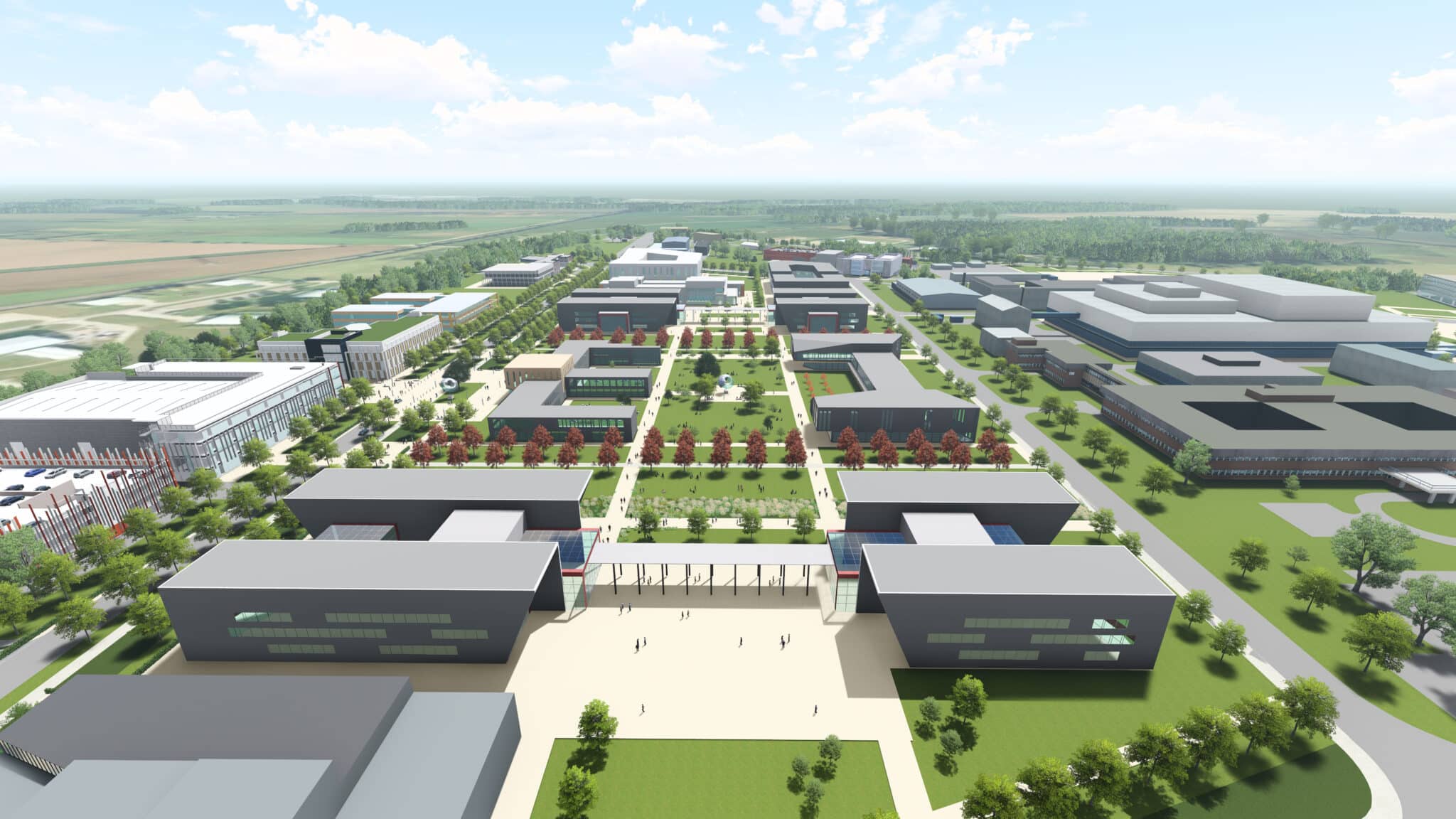
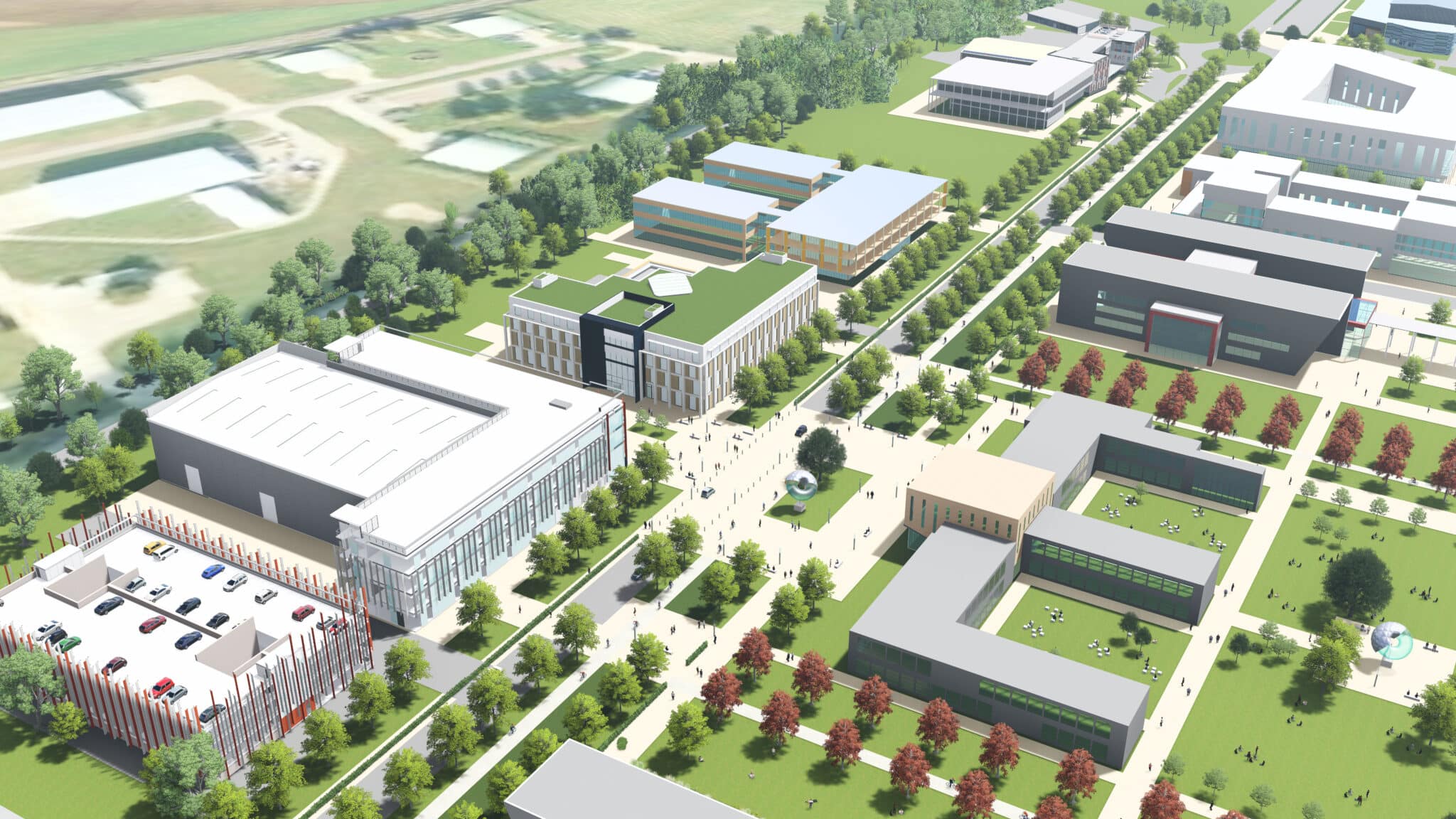
Define acted initially to establish a vision for a phased growth and redevelopment of Culham Campus that supports UKAEA’s ambition. This process involved responding to key features, considerations and complexities of the site and its immediate context, identifying key infrastructure requirements to facilitate development and growth and setting out a robust placemaking strategy to support the creation of an attractive and cohesive campus and its successful evolution over time (short, mid, long-term).
We formulated a series of development layers considered fundamental for the successful redevelopment of the campus; these included essential infrastructure facilitating both active travel and vehicular movement, green infrastructure, addressing specific landscape, ecology and biodiversity requirements and blue infrastructure that supports a sustainable approach to drainage.
Materials Research Facility Hot Cells
The strategy
The placemaking strategy we devised focuses on creating a connected and legible working environment that welcomes employees and visitors, encourages social interaction and enhances the everyday experience of its users. It identifies spatial foci, key areas and buildings that enhance the experience of the users.
Based on the above, the masterplan for the campus identifies where development should be located, as well as the general form and massing of the development for maximum integration. It carefully considers the spatial implications of behavioural and infrastructure changes, like for example the modal shift from car journeys to other forms of travel and prioritising the utilisation and repurposing of existing infrastructure.
The framework masterplan culminates in a spatial plan that illustrates how the site might grow to 2025 (short-term), from 2025-2035 (mid-term) and from 2035 to 2050 (long-term).
Project Team
Andy Williams
Joe Gerrard
Wes Sedman
Maria Zouroudi
Let’s define your next project
Curious about how we could work together? Our team of planners, designers and landscape architects are ready to help bring your vision to life.